SpaceX Gets FCC Approval for Up to 1 Million Starmind Satellites. What Does It Really Mean?
The FCC granted SpaceX a conditional, partial authorization for its Starmind orbital data centers. Here is what the million-satellite figure, radio limits and launch deadlines actually mean.
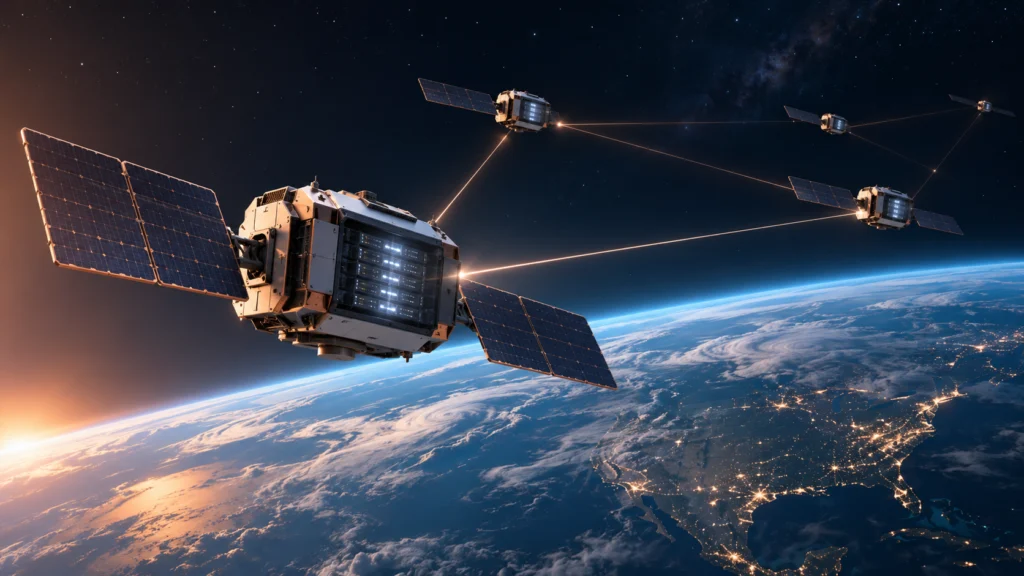
A million satellites sounds like a launch plan for tomorrow. It is not. The Federal Communications Commission has granted SpaceX a conditional, partial authorization for Starmind, a proposed network of orbital data centers. The number in the order is a ceiling for the system, while the first deployment deadline is seven years away.
What did the FCC actually approve?
In its November 25 order, the FCC’s Space Bureau authorized backup and emergency radio communications for a proposed constellation of up to 1 million satellites. SpaceX calls the system Starmind and describes satellites that would perform data-center work in low Earth orbit. The filing places them in orbital shells between roughly 500 and 1,002 kilometers above Earth.
The distinction matters: this is a regulatory authorization with conditions, not an announcement that a million spacecraft have been built, funded or launched. The order itself says the application was granted in part and deferred in part. It does not settle whether the project can be manufactured or operated at the proposed scale.
Why are radio frequencies part of an orbital data center?
SpaceX proposes to use optical links as the primary way to move information between spacecraft. The frequencies covered by this FCC decision are for backup telemetry, tracking and commands if those links fail. The agency allows that radio use only on an unprotected, non-interference basis. In practical terms, SpaceX cannot demand protection from other authorized operators in those bands and must stop an operation that causes documented harmful interference until the problem is resolved.
That is narrower than a general license to send all of the data center’s traffic over the newly authorized radio bands. The FCC also requires coordination with affected federal systems. Those constraints are easy to miss when the headline number takes up all the attention.
When could Starmind satellites launch?
The order sets milestones, rather than an immediate launch date. SpaceX must place at least one authorized satellite into its assigned orbit and operate it by November 25, 2033. To retain the authorization under the stated schedule, it must reach 10% of the maximum number by 2035, 50% by 2038 and the remainder by 2040.
Those are license deadlines, not a forecast that each target will be met. They also show the enormous gap between approval on paper and a working million-satellite network. The FCC says the 15-year license term begins when SpaceX certifies that its first Starmind satellite is operating in conformity with the authorization.
What is still unresolved?
One important issue is how satellites at higher altitudes would be disposed of after their missions. SpaceX sought flexibility for alternatives to atmospheric reentry. The FCC deferred that waiver request, saying the company had not supplied enough information to justify it. Before deploying Starmind satellites that would not be disposed of through reentry, SpaceX must seek a modification and provide more support. The order also calls for additional debris-mitigation details before satellites operate above 600 kilometers.
Concerns about congestion and collisions were raised during the proceeding. The FCC requires semiannual reports covering such matters as close approaches, satellites removed from operation, reentries and the total number deployed. Those reports would give the public a better way to follow what actually happens than the one-million figure alone.
For now, the clearest reading is simple: SpaceX has a conditional path to test and build a vast orbital computing system, with specific radio limits and future milestones. Whether Starmind becomes a functioning network at anything close to its proposed scale remains an open question.
Sources
How did this story land?
Choose one reaction
Tap again to remove your reaction.
Comments 0
Join the discussion with a thoughtful take.
Start the conversation.